
Chickens & Poultry
A living floor for healthier, more manageable chicken coops
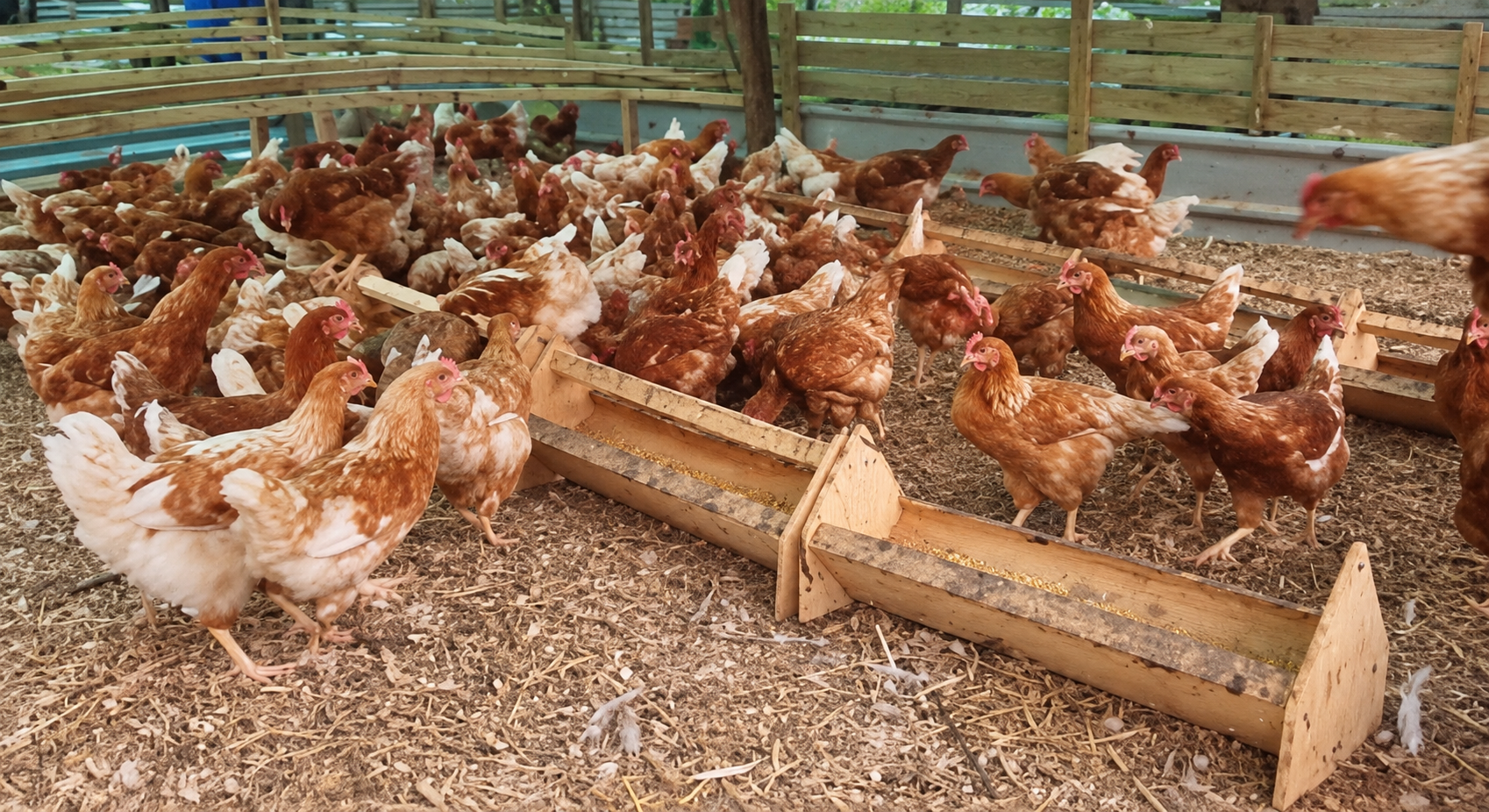
Chicken coops and enclosed runs can quickly develop the familiar problems of manure build-up, ammonia smell, flies, wet bedding and repeated cleaning. L.O.G.S. turns the floor beneath the birds into an active, carbon-rich living system designed to help manage manure and moisture as the flock uses the space.
Unlike ordinary bedding that is simply added, soiled and removed, a L.O.G.S. poultry floor is designed to remain loose, aerated and biologically active over time.
How the poultry system works
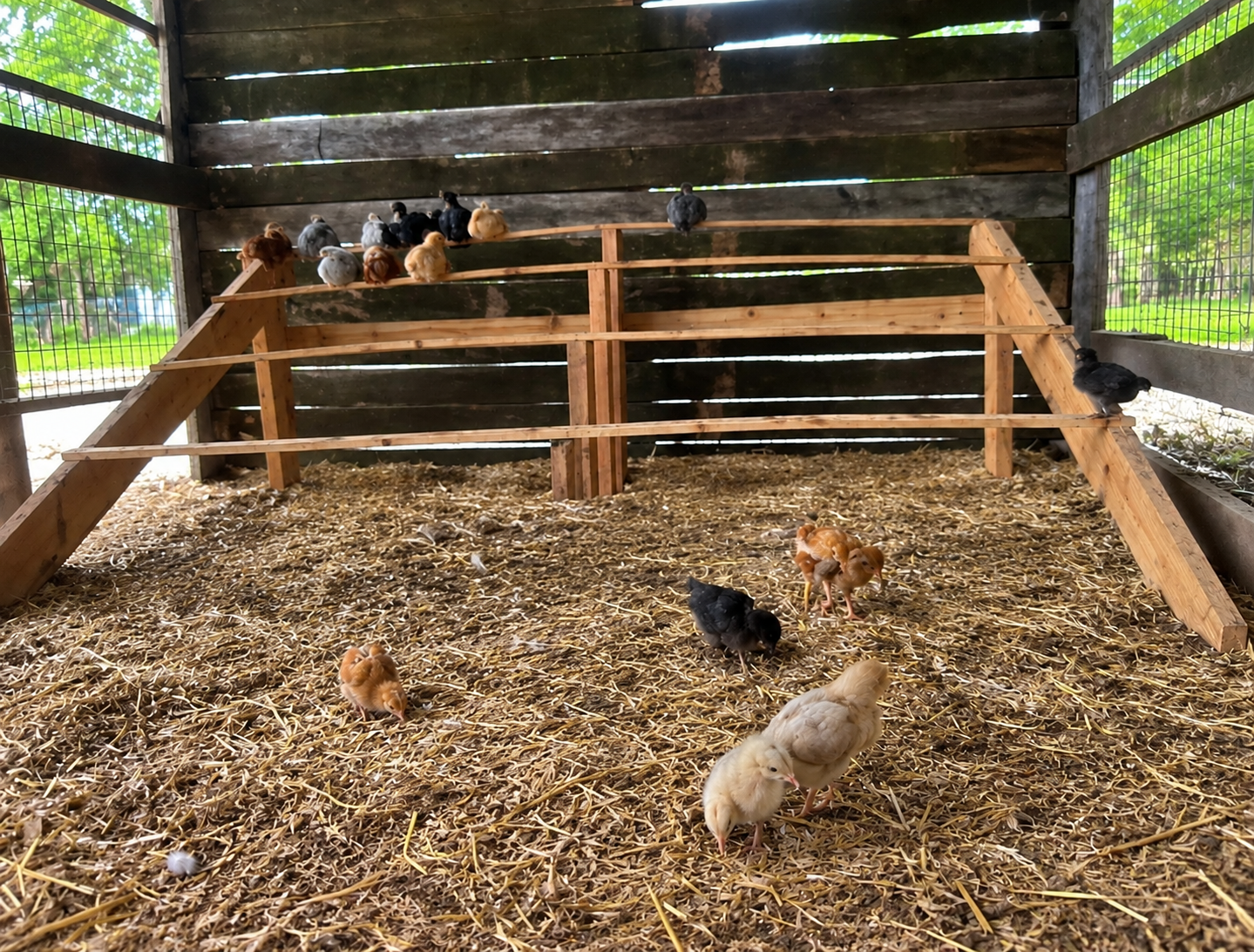
The poultry system uses a carefully prepared earth-based floor wherever possible, with coarse carbon-rich materials such as woodchips, dry plant material and other suitable natural bedding. Biological inputs are introduced when the system is established to support a balanced microbial environment within the floor.
Chickens are an important part of how the system works. Their natural scratching continually turns the top layer, helping to keep it open and aerated while moving droppings down into the carbon-rich working zone below. This supports the gradual breakdown of manure rather than allowing it to sit and build up on the surface.
Designed around light and airflow
A L.O.G.S. chicken coop is planned to be dry, well ventilated and comfortable for the birds. Good airflow helps move excess moisture out of the coop and supports an aerobic floor environment.
Where appropriate, the coop design can also allow controlled sunlight to reach part of the bedding during the day. Light, airflow and the birds’ scratching work together to support a drier, more usable floor.
Earth floor or existing concrete slab
An earth floor is often the most natural starting point because it connects the system to the surrounding soil and allows the site to be assessed as one living ground environment.
However, L.O.G.S. can also be built on an existing concrete slab. This uses a different, more carefully contained build so that the carbon layers and moisture management work correctly above the concrete. The suitable approach is confirmed after looking at the existing coop and how it is used.
What L.O.G.S. is designed to help with
- Manure accumulation in chicken coops and enclosed runs
- Ammonia odour and fly pressure
- Wet, dirty or compacted bedding
- Frequent full clean-outs
- A coop floor that becomes difficult to manage in wet weather
Results depend on flock size, coop size, ventilation, water management, feed placement, weather exposure and regular bird care. L.O.G.S. is designed to work alongside good poultry husbandry, not replace it.
Flock numbers and space
The appropriate flock size is assessed for each coop. It depends on the type of birds, usable floor area, ventilation, water placement, whether the flock has an outdoor run, and how much time birds spend on the L.O.G.S. floor.
The system should never be used to justify overcrowding. Too many birds in too little space can overwhelm any bedding or ground-management system.
Maintenance
L.O.G.S. poultry floors are designed to reduce the need for repeated complete clean-outs, but they still require sensible observation and maintenance.
- Occasionally scattering a small amount of scratch feed to encourage natural turning of the surface
- Adding fresh coarse carbon material when the top layer settles or needs refreshing
- Monitoring bedding around drinkers, feeders and entrances for wet or compacted patches
- A light biological refresh when appropriate for the system and season
- Harvesting only a portion of mature material for garden use when suitable, while retaining the established lower layer to support the next cycle
Is L.O.G.S. right for your chicken coop?
Send L.O.G.S. a few photographs of the coop or run, your approximate flock size, whether the chickens use it overnight or all day, and the main problem you are trying to solve. We can then assess whether a L.O.G.S. poultry floor may be suitable.
Discuss your chicken coop