Piggeries
A protected living ground system for pig sleeping areas
Pigs produce wetter manure, carry a higher moisture load and naturally root the ground beneath them. Without the right structure, a pig pen can quickly become muddy, compacted, smelly and difficult to clean.
L.O.G.S. adapts its layered ground-system principle for suitable pig sleeping and resting spaces. The crucial difference is that the system is designed as a roofed, protected area.
Why the pig area needs a roof
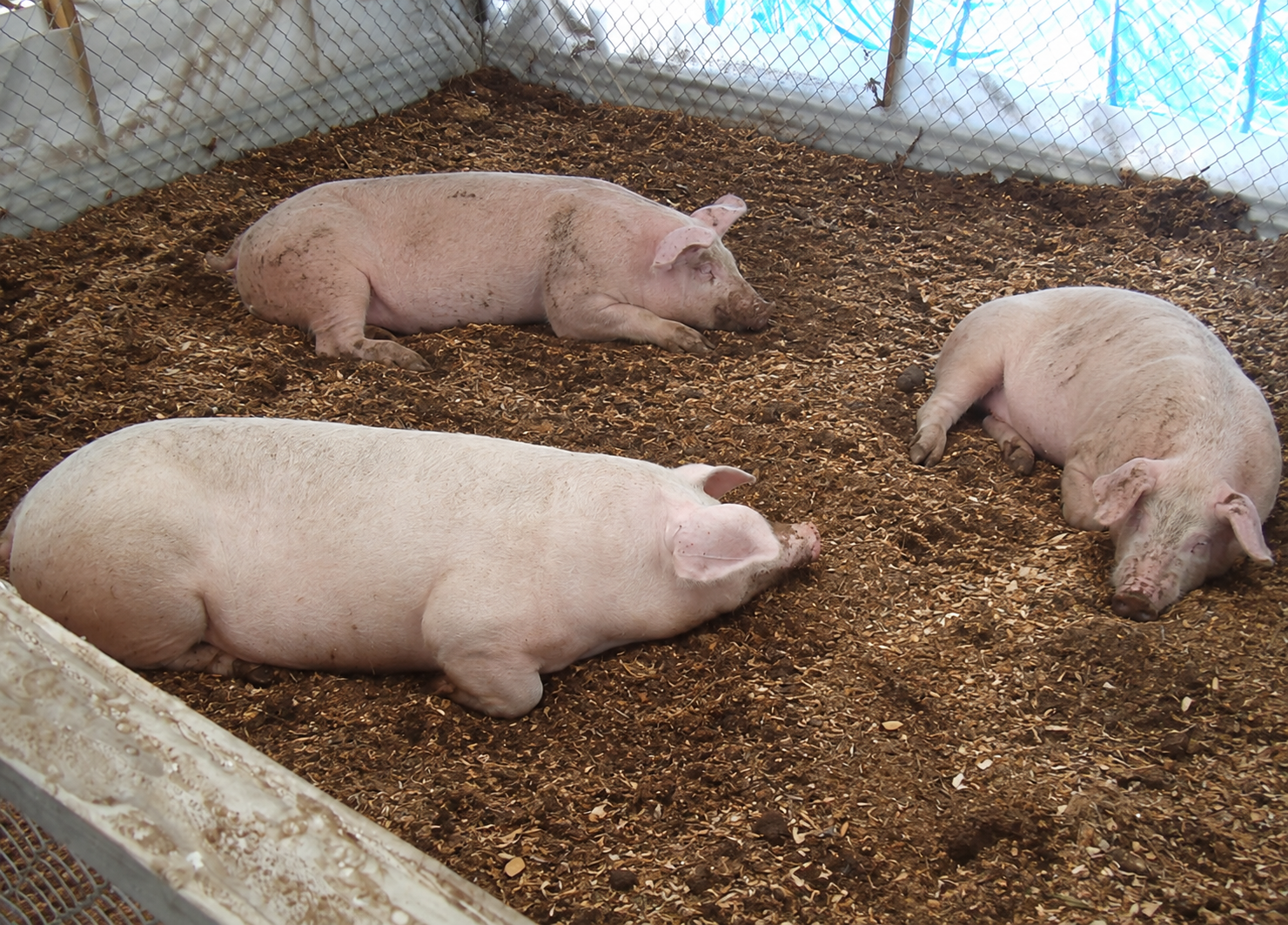
The roof provides the temperature-controlled resting environment pigs need: shade, upward heat movement and airflow. A pitched, ventilated roof planned for the site helps keep the resting area comfortable in both hot and cold conditions.
When pigs become too hot, they naturally dig for cooler ground. That heat-driven digging can disturb the deeper L.O.G.S. layers. Keeping pigs comfortable reduces the drive to dig deeply, while normal surface rooting helps turn organic material into the active top layer.
The roof also protects the deep carbon floor from direct rainfall.
Indoor or semi-outdoor
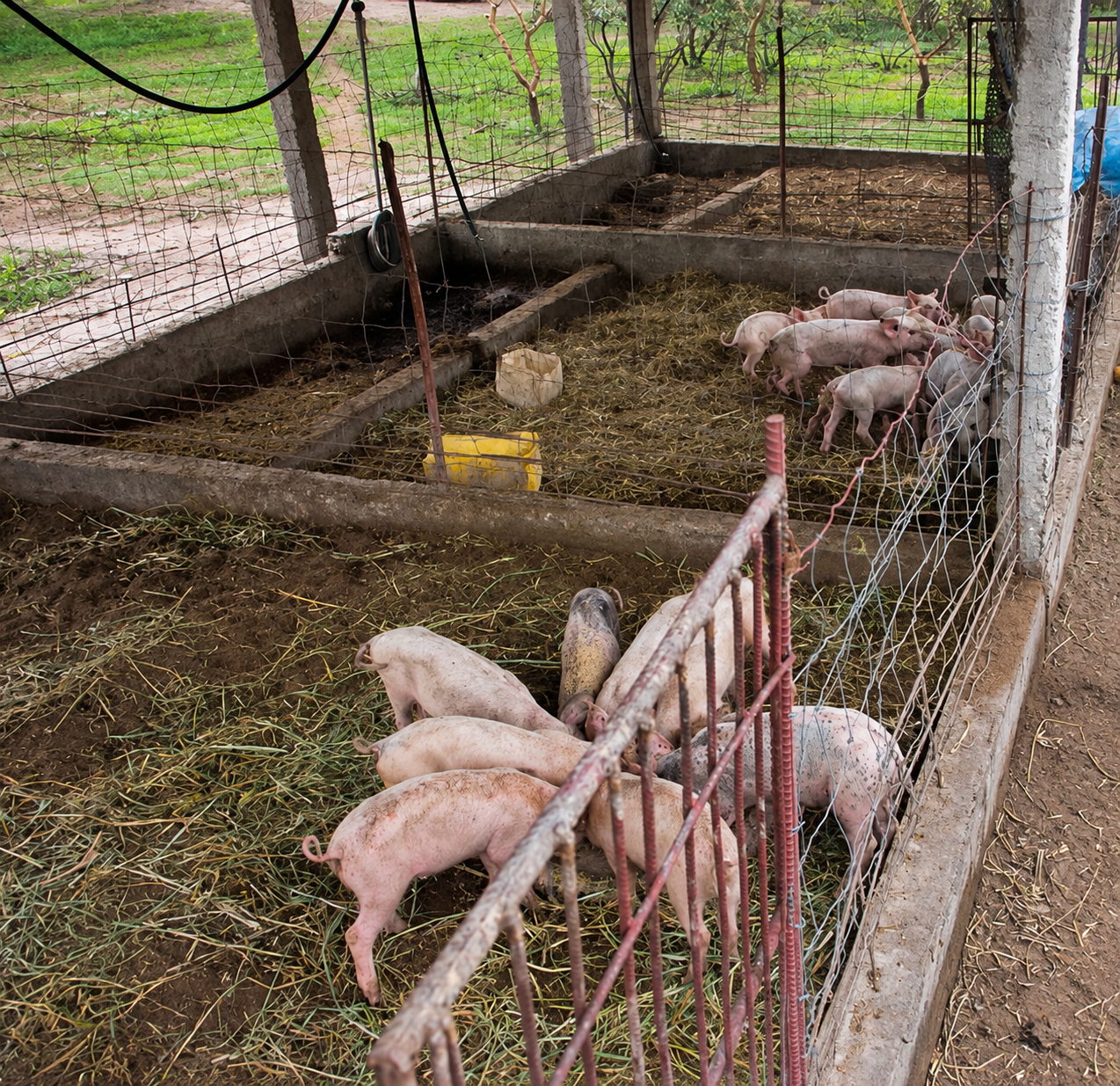
A L.O.G.S. piggery can be fully enclosed, or a roofed open-sided or partly walled sleeping area connected to a separate outdoor run. The protected L.O.G.S. floor is the dry resting zone.
How the floor works
Large logs and coarse timber create the lower structure, with carbon-rich wood material, mineral layers and biological activation above. An additional biochar layer may be included as part of a piggery design.
Concrete, water and feed
An existing concrete floor can be adapted by building the system upwards within designed retaining walls. Because moisture cannot drain through a slab, the roof, wall containment and water management need careful planning.
Water and feed points are assessed separately so persistent spills do not saturate the main deep-bedding resting area.
Designed to help with
- Wet, muddy pig sleeping areas
- Odour and fly pressure
- Repeated bedding removal
- Hot resting areas that encourage deep digging
Numbers and maintenance
Pig density depends on the pig type, age, outdoor access, roofed area, water points and the use of the space. Each design is assessed individually.
The system is low-maintenance, not no-maintenance: it needs a loose carbon-rich top layer, occasional woodchip top-ups, biological refreshes and early attention to wet patches.
Is L.O.G.S. right for your piggery?
Send photographs and a short description of the pigs, current floor, roof, water and feed points, and the problem you want to solve.
Discuss your piggery